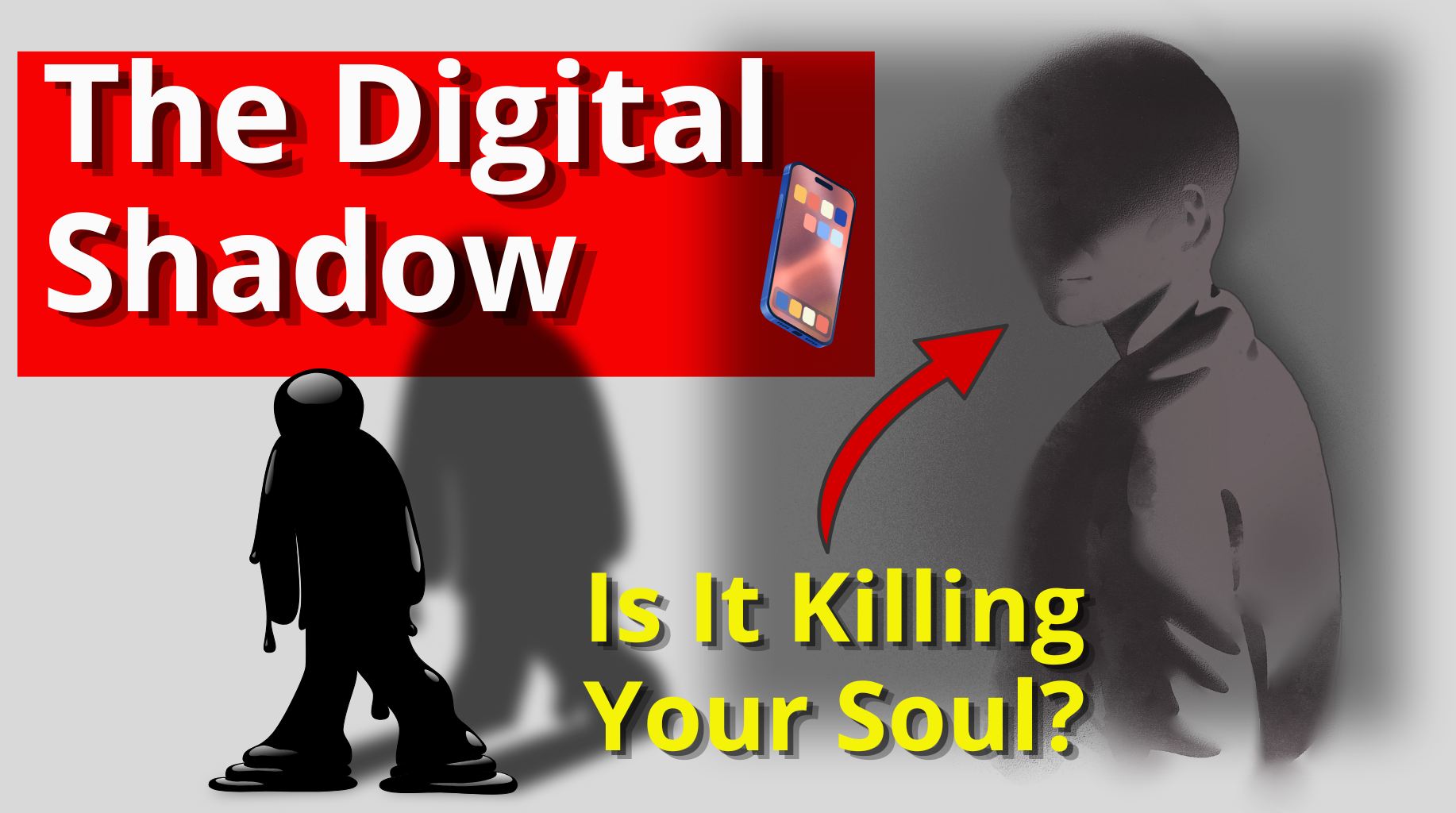
You Are Not What Your Feed Says You Are
A Practical Guide to Reclaiming Your Mind from the Algorithm
The Pull
It usually starts innocently. You open an app for two minutes and surface forty-five minutes later, vaguely unsettled, unable to name what just happened. You were not attacked. No one hurt you. But something was quietly extracted from you, and you are not sure what.
If you are between twenty-eight and forty-eight, you probably did not grow up with this. You remember a time before the scroll. You have a reference point for what undivided attention felt like. That memory matters more than you think, because it tells you something true: this restlessness is not your natural state. It was trained into you.
TikTok's recommendation engine is not random, and it is not neutral. It is a feedback loop engineered to keep your attention by reading your behavior and mirroring it back at you. Watch a video about loneliness for five seconds longer than average, and you have told the system something. It remembers. It builds a portrait of your emotional state and serves content calibrated to hold you there, not to help you move through it.
That is the mechanism. But the real question is not how it works. The real question is why it works on people who know better, and what to do about it.
Why Smart, Self-Aware People Get Caught
You do not have to be naive to be affected by this. In fact, self-awareness can make it worse. People who are already inclined toward introspection are more likely to find emotionally resonant content compelling. You watch someone articulate something you have never quite put into words, and the brain registers a small reward: I am understood. I am not alone in this.
That feeling is real. The problem is what comes next. The algorithm interprets that engagement as a request for more. And more arrives. Within days, your feed is a curated gallery of your own unresolved feelings, dressed up as community and humor.
There is an important distinction that gets lost here: validation is not the same as healing. Being seen in your struggle is a good thing. Watching a sixty-second loop of that struggle on repeat is something else entirely. The first opens a door. The second locks you in the room.
This is not a personal failure. The system is designed to exploit a legitimate human need. You were built for recognition and belonging. The algorithm found the door and knocked at it, every hour, with content that smells like connection but does not nourish.
What Is Actually Happening in Your Brain
The human brain has a negativity bias. This is not a defect. It is ancient architecture, developed over millennia, designed to keep you alive by paying closer attention to threats than to pleasant scenery. When something goes wrong, your brain encodes it more deeply, recalls it more quickly, and returns to it more readily than it does positive experiences.
Content algorithms exploit this without shame. Negative emotional content generates more engagement, and engagement is the only currency that matters to the platform. So the system serves you more of what makes you feel anxious, sad, or socially inadequate, not because it wants to harm you, but because it wants to keep you watching. Your distress is a business metric.
Over time, this steady diet reshapes your internal landscape. It is not a sudden break. It is erosion. Slowly, the threshold for what feels normal shifts downward. You become accustomed to a low-grade emotional noise you can no longer remember life without. What was once a diversion becomes the background frequency of your days.
The Counterfeit Community Problem
One of the most seductive features of mental health content on social platforms is the sense of belonging it creates. You find creators who articulate your exact experience. Their comment sections are full of people echoing your internal world. It feels like community, and in a thin sense, it is.
But community is not the same as communion. Real belonging involves reciprocity: someone knows your name, notices your absence, asks a hard question because they care about the answer. A creator with two million followers cannot do that for you. The comment section does not know you are struggling at 2:00 a.m. No one is coming to check on you.
This is not to condemn creators who speak honestly about their own pain. That honesty has genuine value. The problem is when passive consumption of their experience substitutes for active engagement in your own. Watching someone else process their grief does not process yours. It can name it, which is useful. But naming and healing are two different things.
You need people who can see your face when you talk. Who can push back, ask follow-up questions, sit with you in silence when the right words do not come. Digital content cannot substitute for that, no matter how well-produced or emotionally intelligent it is.
A Practical Guide to Reclaiming Your Mental Ground
The following is not a list of hacks. It is a framework, built around the understanding that your mind is a faculty that can be trained. It was formed by habits. It can be reformed by better ones. None of this requires perfection. It requires direction.
Step One: Name the Pattern Before You Try to Break It
Spend three days observing how you feel before, during, and after your sessions on high-engagement platforms. Do not change your behavior yet. Just observe. You are building a case, not enforcing a verdict.
Questions to carry with you:
- What was my emotional state when I opened the app?
- What kind of content held my attention the longest?
- How did I feel twenty minutes after closing it?
Most people find that certain emotional states — boredom, low-grade anxiety, loneliness — are reliable triggers. That pattern is the target. You cannot interrupt what you have not yet seen.
Step Two: Interrupt the Trigger, Not Just the Behavior
Most digital wellness advice focuses on the phone — delete the app, set a timer, use grayscale mode. These are not wrong, but they address the symptom rather than the source. The scroll is the response to a feeling. Address the feeling.
Identify your top two or three trigger states and build a specific, concrete alternative response to each one. Not a vague intention but an action: if I feel lonely, I will text one person. If I feel restless, I will walk outside for ten minutes without my phone. If I feel anxious, I will write for five minutes before touching any screen.
The goal is not willpower. Willpower is finite and unreliable. The goal is to lower the friction on a better response and raise the friction on the default one. You are re-engineering the path, not white-knuckling your way down the same one.
Step Three: Actively Redirect the Algorithm
If you are going to use the platform, use it with intentionality rather than passivity. The algorithm is not destiny. It is a machine that responds to input. Change the input.
Concrete actions:
- Use the Not Interested function aggressively on content that leaves you feeling worse than when you started.
- Actively seek and engage with content about growth, recovery, skill development, and beauty. Linger on it. Like it. Comment. Give the algorithm a different instruction.
- Follow accounts that challenge you or teach you something, not only those that reflect you back to yourself.
- Periodically clear your watch history and give the system a clean slate. This does not reset everything, but it disrupts the momentum.
This takes two to three weeks of consistent effort before the feed noticeably shifts. It will shift. The machine follows where you lead, once you decide to lead.
Step Four: Rebuild Real Connection Deliberately
This is the step most people skip because it is the hardest. Sending a text is easy. Scheduling a conversation requires something from both parties. Sitting with someone who knows your actual life is uncomfortable in ways that a comment section never is, because real people ask real follow-up questions.
But that discomfort is the point. Growth does not happen in echo chambers, digital or otherwise. It happens in the friction of genuine exchange — the kind where someone who loves you says, I think you are wrong about that, or, I notice you have been quieter lately.
Practical starting points:
- Schedule one real conversation per week with someone who knew you before your current struggles. Context matters in human relationship.
- If therapy is accessible to you and you have been postponing it, stop postponing it. The same content you have been watching for months is a sign that something needs more than passive consumption to move.
- Find a group organized around something you want to become, not only around what you are struggling with. Shared aspiration is a more generative foundation for community than shared pain.
Step Five: Establish a Non-Negotiable Morning Protocol
How you begin the day sets the attentional tone for everything that follows. A morning that starts with passive consumption trains the mind toward receptivity and reactivity. A morning that starts with active, intentional engagement trains it toward agency.
The protocol does not need to be long. It needs to be consistent. A minimum viable version: do not touch your phone for the first thirty minutes after waking. In that window, do one of the following: read something that requires sustained thought, pray or meditate, write a few sentences about what you intend for the day, or simply sit in silence. These are not mystical practices. They are attentional hygiene.
The mind that wakes to silence and intention is a fundamentally different instrument than the mind that wakes to a flood of other people's content. You are choosing, from the first moments of consciousness, whether the day belongs to you or to the feed.
Step Six: Distinguish Consumption from Processing
There is a form of emotional avoidance that disguises itself as self-awareness. You watch video after video about anxiety. You know all the clinical terminology. You can describe your nervous system responses in accurate detail. And yet nothing changes.
Consuming information about your pain is not the same as processing your pain. Processing requires active engagement: writing, speaking aloud to another person, sitting with the feeling long enough to let it move through rather than watching it on a loop. Information without application produces what might be called informed stagnation: you know more and more about why you are stuck while remaining exactly where you are.
After every piece of content that genuinely resonates with you, ask one question: What do I do with this? If you cannot answer that, the content may have given you language but not movement. Language is the beginning of healing, not the destination.
You Are More Than Your Patterns
There is something worth saying plainly: the algorithm knows your patterns, but it does not know you. It knows what you watched, not what you are capable of. It knows what held your attention in a weak moment, not what you give your attention to when you are at your best.
You are not a set of behaviors waiting to be optimized by a machine. You are a person with a history, a conscience, and the capacity to choose differently today than you did yesterday. The feed is not your autobiography. It is a reflection of what you were in your most distracted moments. That is not the whole of you.
Reclaiming your attention is not primarily a digital detox. It is an act of self-respect. It is the quiet, unglamorous decision that your mind is worth protecting, that your emotional life deserves more than passive consumption, and that real healing happens in the world that exists outside the screen.
That world is still there. People in it are still worth knowing. And you are still worth being fully present for them.
Core Takeaways
- The algorithm does not create your emotional state. It amplifies and extends what is already there. Understand the trigger.
- Validation is not healing. Being seen in pain is a starting point, not an end point.
- You can retrain the algorithm. It follows your engagement. Change your engagement.
- Real community requires reciprocity. No platform can replace a person who knows your name and shows up.
- Morning intentionality sets the attentional tone for the entire day. Protect the first thirty minutes.
- Consuming information about your struggles is not the same as processing them. Ask: What do I do with this?
Reflection Question
What would you spend the next thirty minutes on if your phone did not exist — and when did you last actually do that?