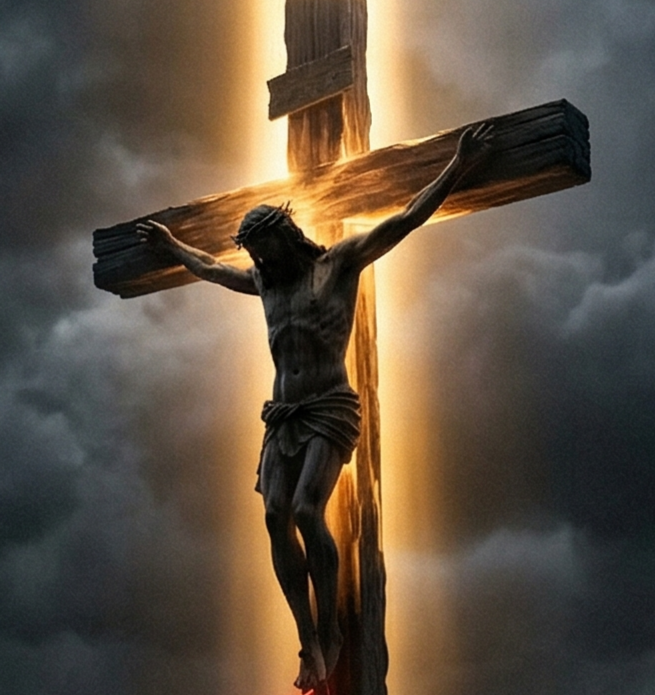
What Is Christianity? A Love–Light–Life Explanation That Cuts Through the Noise
If you type “What is Christianity?” into a search bar and you’ll get thousands of answers—definitions, denominations, doctrines, debates.
But beneath all of it lies a deeper confusion:
Is Christianity a religion, a moral system, a cultural identity, or something else entirely?
Because depending on how you answer that, everything else—beliefs, practices, divisions—either clarifies or collapses.
So let’s answer it at the root.
I. Christianity Is Not First a System—It Is a Revelation
In the Love–Light–Life framework, Christianity is not best understood as a human attempt to reach God.
It is the opposite.
Christianity is the claim that God has revealed Himself in a way that exposes, confronts, and restores human reality.
That revelation is not abstract.
It is personal, historical, and interpretive—centered in Jesus Christ.
So before asking what Christians believe, the more precise starting point is:
What has been revealed—and what does that revelation do to us?
II. LOVE — The Restoration of Right Relationship
At the level of Love, Christianity addresses the most basic fracture in human existence:
Not ignorance.
Not weakness.
But misaligned desire and broken relationship with God.
In your theological framework, evil is not a created substance—it is privation, a turning away from the Good when it is revealed.
So Christianity proclaims:
- God is not absent—He is self-giving
- Humanity is not neutral—we are misaligned responders
- Salvation is not arbitrary—it is restoration through encounter with divine love
This is why the core message is not merely “be good,” but:
Be reconciled.
Christianity, then, is the reordering of the human person back into right relation with God through Christ.
III. LIFE — The Historical Entry of Redemption
The question “Did this actually happen?” is unavoidable.
Christianity does not rest on timeless philosophy alone—it makes a bold claim:
That God acted within history in a decisive, embodied way.
The life, death, and resurrection of Jesus are not symbolic add-ons—they are the structural center of the faith.
But within your framework, this matters for a deeper reason:
- Truth is not merely stated—it is enacted
- Grace is not merely offered—it is embodied
- Judgment is not arbitrary—it is revealed through response to that embodiment
So Christianity teaches that:
- God enters history
- Humanity encounters that revelation
- Each person is exposed, tested, and formed by their response
This is where your concept of adokimos (reprobation as confirmed refusal) becomes crucial:
Christianity is not God creating evil in people—it is God revealing Himself, and people becoming what they choose in response.
IV. LIGHT — Truth as Disclosure, Not Just Information
At the level of Light, Christianity is not simply a set of doctrines to memorize.
It is a disclosure of reality that reinterprets everything:
- God is not an abstract force—He is personal and self-revealing
- Truth is not constructed—it is uncovered
- Darkness is not equal to light—it is the absence of it
This means:
- Sin is not just rule-breaking—it is living out of alignment with revealed truth
- Judgment is not imposed cruelty—it is the experience of truth once it is no longer resisted by grace
- Salvation is not mere escape—it is coming into the light and being made whole
So Christianity, in its essence, is:
The unveiling of reality as it truly is, through the person of Christ.
V. What Do Christians Believe? (At the Core)
Strip away cultural differences, and the historic center of Christian belief looks like this:
- God is real, personal, and the source of all that exists
- Humanity is created for relationship with Him but lives in misalignment (sin)
- Jesus Christ is the decisive revelation of God—His life, death, and resurrection are central
- Salvation is reconciliation with God through Christ, received by faith
- Truth transforms those who receive it and exposes those who resist it
Everything else builds outward from these foundations.
VI. Why So Many Versions? (Catholic vs Orthodox vs Protestant)
This is where many people get stuck:
“If Christianity is true, why are there so many denominations?”
To answer this properly, we need to distinguish between essence and expression.
1. Catholic Church
- Emphasizes historical continuity, sacramental life, and centralized authority
- Strong structure around tradition and teaching authority (Magisterium)
2. Eastern Orthodox Church
- Focuses on mystical theology, divine participation (theosis), and ancient liturgical continuity
- Less centralized, more conciliar in structure
3. Protestantism
- Emphasizes Scripture as primary authority and personal faith response
- Wide diversity of expressions (Evangelical, Reformed, Baptist, etc.)
What’s Actually Different?
- Authority (Scripture alone vs Scripture + Tradition)
- Church structure (centralized vs distributed)
- Sacraments and practices
What’s the Same at the Core?
All three affirm, in their historic forms:
- The centrality of Jesus Christ
- The reality of sin and need for salvation
- The importance of grace
- The authority of Scripture (though understood differently)
VII. The Real Divide Is Not Denominations—It Is Response
In your framework, the deepest division is not between Catholic, Orthodox, and Protestant.
It is between:
- Those who receive the light
- Those who resist the light
Because Christianity ultimately does not function as a tribal identity system.
It functions as a revealing encounter.
And that means:
The decisive line is not institutional—it is ontological.
Closing: The Simplest True Answer
So what is Christianity?
Not merely a religion.
Not merely a belief system.
Not merely a moral code.
It is:
The revelation of God in Christ that restores Love, grounds Life in history, and brings Light that exposes and heals the human condition.
And what do Christians believe?
At the deepest level:
That reality is not silent.
That God has made Himself known.
And that what we become depends on how we respond to that revelation.